‘Yoni’ tells hero’s story with little art, much treacle
If you learn one thing from the documentary Follow Me: The Yoni Netanyahu Story, it’s that the title character was a poster boy for patriotism. The movie tells you this so many times, in fact, that you can probably enter it for a five-minute portion and walk away with this theme.
The eldest brother of Israel’s current prime minister and a top 20 finalist in a 2005 poll of the greatest Israelis of all time, Netanyahu was a model soldier who died tragically in Operation Entebbe, the 1976 hostage-rescue mission carried out by his country’s secret defense unit. I’m not spoiling anything here; the film reveals as much in the prologue.
Using stock footage and English-language interviews with his friends, colleagues and family (yes, including Bibi), the movie reconstructs Yoni’s life story in a manner that is as predictable as a sunset, making the staid formulae of public-television documentaries appear radical by comparison. A long 84 minutes, Follow Me is repetitive, sentimental and hagiographic -- the cinematic equivalent of an authorized biography, bleached of controversy and swelling with one-note admiration for its subject.
Just to be clear on this, I’m not criticizing Yoni, or his brother, or Israel. The film makes an abundantly clear case for Yoni’s inclusion in the history books and the hearts and minds of millions. His military fortitude is unquestionably inspiring: He was an academic who eschewed a plum life as a Harvard student to fight for his homeland, sacrificing any and all romantic relationships for his country.
As the film’s many audio excerpts from his letters testify, he was immersed in war while maintaining a strikingly poetic distance from it (“War is hanging over my head like a swollen balloon,” was one literate example). Chances are, average Israelis will embrace this film with a nationalistic fervor, and probably choke back tears through a number of scenes.
Which is all fine. But let’s not kid ourselves into pretending that Follow Me is anything more than an educational video for an Israeli museum or a Jewish day school, like the artistically undistinguished documentaries on Martin Luther King Jr. that I saw in public school. As a piece of art, Follow Me is pretty hackneyed stuff.
The obtrusive, public-domain-quality guitar music coats every scene of Yoni’s childhood in saccharine aural coat, and none of it helps propel the film’s sloth-like pacing. What does perk some interest are the intervallic cutaways to news footage of the four days of existential terror leading up to the raid on Entebbe. But spreading them out amid Yoni’s biography only makes the man’s life story (fighting in the Six Days’ War and Yom Kippur War, like most Israelis of his generation) look saggy and ordinary by comparison.
Follow Me seems to overtly sidestep any inflammatory political statements -- not an easy accomplishment in a film whose climax is the Palestinian terrorist plot that martyred an Israeli hero. But the project still has a whiff of propaganda, the same whiff that permeated the pro-war dramas of Hollywood’s Golden Age.
If it were about an American military hero, it might end with a shirttail about where to enlist with the armed forces. It shows that even polite, middlebrow docs like this can have an agenda.
FOLLOW ME: THE YONI NETANYAHU STORY. Directors: Jonathan Gruber and Ari Daniel Pinchot; Distributor: International Film Circuit; Not rated. Opens Friday at Regal Shadowood 16, Living Room Theaters at FAU, Muvico Parisian 20, Cobb Downtown at the Gardens, Regal Delray 18, Movies of Delray, Cinema Paradiso and O Cinema.
The View From Home 38: New releases and notable screenings, May 15 to June 9
Not since A Clockwork Orange has Beethoven’s music been imbued with as much primal sexual urgency as in The Kreutzer Sonata (Zeitgeist, $19.93), a present-day transplant of a controversial 19th-century novella by Tolstoy.
In the performance montage scenes of the titular sonata, the violin and piano play off each another like generous lovers. The players penetrate one another with their eyes, and the quickening violin strains crescendo toward an orgasmic climax before settling into a post-coital reticence.
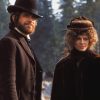
Or at least that’s how Edgar (Danny Huston), the paranoid and probably psychopathic protagonist of The Kreutzer Sonata, sees it, and his paranoia becomes ours. The piano player is his wife Abigail (Elisabeth Röhm), and the violinist is a young Asian virtuoso named Aiden (Matthew Yang King). They have gotten together, at Edgar’s request, to perform the challenging sonata as a fundraiser for his charitable foundation.
Like Tom Cruise’s Dr. Harford in Eyes Wide Shut, it’s not long before Edgar’s mind becomes immersed in the lurid sexual fantasies he imagines Abigail enjoying with Aiden. With two time-consuming children to raise and a relationship fizzling under the labor of domesticity, Edgar grows increasingly insecure, voyeuristic and potentially violent. His response is extreme but his justification is plausible; wisely, screenwriters Lisa Enos and Bernard Rose keep open the possibility that his wife is being unfaithful, planting the nuggets of suspicion that metastasize inside Edgar like a cancer, eating away at his rationality.
Eschewing the moral puritanism that drove Tolstoy’s source material – amazingly, his Kreutzer Sonata was an argument in favor of sexual abstinence – director Rose offers a more realistic, sexually saturated environment. Erotic art and hotel pornography share screen time, and the carnal relations are inevitable and indeed desirable. Despite a few cross-cutting choices that distance the husband-and-wife sex scenes (a la Nicholas Roeg’s Don’t Look Now), the coitus in The Kreutzer Sonata is steamy in its matter-of-factness, refreshingly void of soft filters, dreamy incandescent light and the kind of abstract close-ups that obscure the naughty parts.
It’s all of a piece in a film that strives for, and almost always attains, a documentary naturalism. The movie is shot with spastic, handheld, faux-verité digital cameras, an approach that properly chafes against the immaculate elegance of Edgar’s palatial estate, puncturing his illusion of invincibility. Rose doesn’t reinvent any of the wheels of lo-fi indie filmmaking, but he rides atop them astoundingly well.
His dialogue, too, deserves praise for its naturalism; the final product has the air of an unscripted character workshop -- in a good way. Even the dreaded voice-over narration, delivered by Huston in a Shatnerian staccato, feels both writerly and extemporaneous, a wholly welcome addition.
The Kreutzer Sonata treats its adults with respect even when they’re behaving foolishly, and its sobering excoriation of the limits of male jealousy will stick in your craw like a spouse’s mysterious text message. I’m not sure if Tolstoy would approve, but Beethoven, were he not deaf and dead, would probably appreciate the movie’s approach to the old in-and-out.
DVD Watch
May 15: One of the most interesting omnibus films of the past quarter-century arrives on Blu-ray today in 1989’s New York Stories (Mill Creek Entertainment, $9.98). Three directors who have used the Big Apple as their cinematic playground -- Martin Scorsese, Frances Ford Coppola and Woody Allen -- offer three short films set in, and typifying, the city. The general consensus, and it’s a correct one, is that only Scorsese’s film, with Nick Nolte as an unctuous artist, transcends the concept as a great stand-alone picture, but New York Stories is an enjoyable experiment nonetheless. Look for a cameo by an unknown Larry David in Allen’s segment.
Mill Creek Entertainment is apparently starting to curb the market on budget Blu-ray discs; the distributor is also releasing Before and After ($9.98), Barbet Schroeder’s 1996 drama with Meryl Streep and Liam Neeson as the parents of a teenage boy who is accused of murdering his girlfriend. The DVD version of this title has been out of print for some time.
Intrepid art-house distributor Olive Films is releasing a new, three-disc edition of 1900 ($24.96 Blu-ray, $19.93 DVD), Bernardo Bertolucci’s gorgeous, sweeping portrait of 20th-century Italy and its impact on two friends (Robert De Niro and Gerard Depardieu). The three-disc edition contains all 315 minutes of Bertolucci’s feature plus the 52-minute featurette Bernardo Bertolucci: Reflections on Cinema.
On the modern cult front this week, Criterion releases the best edition yet of Spike Jonze’s singularly innovative Being John Malkovich ($27.86 Blu-ray, $24.99 DVD). It includes the bonus features on the previous editions, plus newly recorded interviews with Jonze and Malkovich (in conversation with humorist John Hodgman) and a new behind-the-scenes documentary by filmmaker Lance Bangs.
May 22:Certified Copy, one of the most compelling and mystifying films of 2011, finally receives a home-video treatment more than a year after its all-too-limited theatrical run (Criterion, $29.99 Blu-ray, $28.83 DVD). Two mysterious characters, played by Juliette Binoche and opera singer William Shimell, meet for the first time – or so we think – at an art lecture in Tuscany. They spend the next 45 minutes or so wandering the city and getting acquainted, before they – and the film’s brilliant director, Abbas Kiarostami – suddenly pivot, essentially becoming different people. Were they playing characters (copies of themselves) the entire first half? Does it matter?
A reflection on storytelling, the nature of art and the nature of love and relationships, Certified Copy is an intellectual exercise worth multiple viewings and multiple viewpoints, which this edition is sure to provide. It includes an interview with Kiarostami, an Italian documentary on the making of the film and, most crucially, the home-video premiere of Kiarostami’s 1977 feature The Report, about a tax collector who is accused of taking bribes.
Also of interest this week: Perfect Sense (IFC, $24.99 Blu-ray, $12.99 DVD), an apocalyptic new sci-fi thriller under the direction of provocateur David Mackenzie. Ewan McGregor and Eva Green fall in love in a world that has lost its five senses. And the documentary Bettie Page: Dark Angel (Cult Epics, $16.93 Blu-ray) explores the final three years of the pin-up queen’s tumultuous life, including recreations of Irving Klaw’s lost bondage films.
May 29: Finally! John Cassavetes’ Too Late Blues, one of the most anticipated home-video releases in years, hits retailers from Olive Films ($26.96 Blu-ray, $17.93 DVD). The second feature from the independent maverick stars Bobby Darin as a nomadic jazz bandleader trying to keep his crumbling band intact while falling in love with a sultry soul singer with a troubled past (Stella Stevens). This week also marks the home-video debut of Nicholas Ray’s Run for Cover (Olive, $26.96 Blu-ray, $22.46 DVD), the director’s follow-up to his classic gonzo western Johnny Guitar, about a wrong-man ex-convict (James Cagney) who becomes a local sheriff.
Just in time for summer, Ingmar Bergman gets a double dip of seasonal dramas with Summer Interlude and Summer With Monika ($19.99-$27.99 Blu-ray, $14.99-$21.99 DVD). The latter is one of the director’s sexiest and most luminous movies, finally available in a transfer befitting its erotic splendor. It’s chock-full of special features, while Summer Interlude is an almost bare-bones disc, which is why it’s the far cheaper of the two.
June 5:A bonanza of Blu-ray premieres rule the week, with Clint Eastwood’s underrated masterpiece A Perfect World ($15.83) and his solid cop thriller Blood Work ($14.99) due out from Warner Home Video. 20th Century Fox unveils The Grapes of Wrath ($19.99), possibly John Ford’s greatest achievement, and Universal bows three fully loaded editions of The Sting ($24.96 Blu-ray Book, DVD and digital copy; $14.95 Blu-ray, DVD and digital copy and $11.93 DVD and digital copy).
TCM Watch
At 12:45 a.m. May 16, set your DVR for Stars in My Crown, an American Western starring Joel McCrea and directed by French noirist Jacques Tourneur. Tourneur successfully transplants urban paranoia into a Western setting, and his film is one of the fiercest excoriations of racism I’ve seen anywhere. This movie is semi-rare, having only been made available on a limited Warner Archive DVD.
The brightest jewel in TCM’s May schedule is Jean Renoir’s A Day in the Country, which runs at 4 a.m. May 20 (following the director’s more readily available Rules of the Game). A curious footnote in Renoir’s impeccable career, the 40-minute Day in the Country is a bittersweet comic vignette that was supposed to have been expanded into a feature but was stymied by Renoir’s self-admitted “creative block.” At any rate, it’s never been released on DVD in the States.
At 4:30 a.m. May 28, TCM is running Don Siegel’s 1955 drama An Annapolis Story, a two-guys, one-girl romance set in a naval academy, which has earned comparisons to the early Oscar winner Wings. It has never been released on DVD. Finally, Let Us Live, running at 4:45 a.m. June 9, is an interesting prison drama with Henry Fonda and Maureen O’Sullivan, directed by the undervalued technician John Brahm, that also has never seen a home-video release.
Lost-dog tale treats its humans with generosity
If you believe, as I do, that the world is divided between dog people and non-dog people, then you know which one you are.
We dog people are mighty and cliquey, often only hanging around each other. Like right-wing conservatives or Celine Dion fans, I know that non-dog-lovers exist -- I just don’t run in the same circles.
If you’re one of these non-dog-people, you may watch a film like Lawrence Kasdan’s Darling Companion with the kind of critical distance and objectivity that I envy. As a dog person, I have trouble viewing any canine movie -- except for the kind where the pooches talk or slam-dunk -- with anything but full-on emotional subservience to its every sentimental whim. I blubbered over Marley & Me while most estimable critics torched its maudlin melodramatics, and my heart was in my throat for the majority of Darling Companion.
This is because, for dog people, there are few things more debilitating than the loss of a dog. Not by death; as bad as a pet’s demise is, in many cases the family can see it coming. But the loss of a dog -- one minute it’s here, the next it’s run off, possibly never to be seen again, leaving our imaginations to run amok with horrible possibilities -- is a crisis of existential magnitude.
This is the case faced in Darling Companion by overworked spinal surgeon Joseph Winter and his wife Beth (Kevin Kline and Diane Keaton) the day after their daughter’s wedding in the Rockies. During a routine walk in the forest, Joseph takes a phone call from his hospital, and Freeway, the family’s collie mix -- discovered by Beth a year earlier on the side of a snow-covered highway -- bolts off.
The rest of the picture consists of the Winters and their extended friends and family searching for Freeway, assisted less by the local law authorities -- represented by Sam Shepard in a small comic role -- than by the caretaker of their daughter’s wedding, Carmen (Ayelet Zurer). A beautiful mystic who describes quarreling humans as being “out of alignment,” Carmen claims to be psychically linked to the canine world, sending the family on wild dog chases whenever visions come to her.
Darling Companion is a winning, old-fashioned, instantly accessible and often amusing feature for families -- which in this case does not necessarily mean a movie for kids (it’s much more mature than We Bought a Zoo, for instance). It’s a PG-rated film, but one moment of personal injury/bonding between the Winters -- recalling the famous leeches scene in The African Queen -- is shocking and transfixing, perfectly rendered in a long, single take.
Predictably, the lost dog brings the divided family together. Everyone, including the wonderful supporting players Mark Duplass, as Joseph’s nephew, and Richard Jenkins, as his future brother-in-law, learns valuable life lessons, even while the hope of finding Freeway seems to slipping away faster than sand in an hourglass.
But it works despite the elliptical familiarity of it all, because Kasdan, who co-wrote this semiautobiographical story with his wife Meg, is such an intelligent, generous and even-handed writer. Darling Companion never becomes a rigid morality fable, and it never demonizes or patronizes any of its characters for the decisions they make or the belief systems they hold.
Ultimately, though, we don’t keep watching Darling Companion to see the evolution of its Homo sapiens, well evoked as it may be. Freeway is the reason we’re glued to this story, and his physical removal a third of the way into the picture has an impact not unlike Janet Leigh’s notorious exit from Psycho or Lea Massari’s disappearance toward the beginning of L’Avventura: There is a noticeable void left by the character’s absence.
Whatever the result turns out to be, it’s a quietly wrenching experience for us dog people.
DARLING COMPANION. Director: Lawrence Kasdan; Cast: Kevin Kline, Diane Keaton, Richard Jenkins, Dianne Wiest, Sam Shepard, Elizabeth Moss, Ayelet Zurer; Distributor: Sony Pictures Classics; Rating: PG-13; Opens: Friday at area theaters
Peter Lord and his band of merry stop-action pirates
Grown men don’t usually play with clay, but Peter Lord has made quite a tidy career doing exactly that.
A co-founder of Aardman Animations, the Bristol, England studio that gave the world the Wallace & Gromit series, Lord co-directed and co-wrote the 2000 feature Chicken Run and directs The Pirates! Band of Misfits, in theaters today -- all in playful stop-action.
Fascinated by animation since high school, Lord began by dabbling in the conventional hand-drawn format, “but that was hard work,” he recalls. “This seemed easier, it really did. It seemed more spontaneous.” As he talks, Lord cradles in his arm a 1/6-scale replica of the Pirate Captain, the movie’s lead character (voiced by Hugh Grant). The plot concerns this benign corsair’s attempt to win the coveted Pirate of the Year Award.
Although the stop-action process has been improved over the years with the application of computers, it remains a very hands-on, manual art. To an observer, it looks to be painstaking and tedious. “Yeah, people always think it is. I don’t think it is,” scoffs Lord. “Painstaking, yes, but not tedious, no. This thing with puppets, it just suited me.”
Aardman was established in 1972, exactly 40 years ago. “The story was we had a character and we called him Aardman, a combination superhero and aardvark,” laughs Lord, 59. “Anyway, we sold our first film to the BBC for like 20 pounds. They said, ‘Who do we make the check out to?’ and that’s when we came up with the stupid name.”
Each Aardman film has moved stop-action production techniques forward a bit. But at its most basic level, “You’ve got an articulated puppet that you can control very exactly, and you move it and take a photo, move it and take a photo.” But, Lord quickly adds, “The guys who make the puppets are now so experienced that they make way better puppets.”
The Pirates is the first Aardman project that makes use of 3D printing. “Do you know about 3D printing?,” Lord asks patiently. “It sounds like science fiction, but that (character’s) mouthpiece is animated on a computer and then the computer files are put into a 3D printer and they print out in solid resin. Like magic. So that was jolly new to us.”
The other major advance since Chicken Run 12 years ago is the increased use of computer-generated imaging (CGI). “On ‘Chicken Run,’ we had like three CG shots and on this we had, you know, 400 or whatever it was,” he says. “A tiny thing like candles in the chandelier had CG flames.”
Even action sequences that seem improbable in stop-action can be achieved that way thanks to Aardman’s ability to digitally erase the supports which allow objects to be constantly repositioned, like the huge barrels that bounce and roll across the pirate ship’s deck late in the movie.
“What you’re not seeing is the metal rigs. In the ‘Chicken Run’ days, we tried it with string, which was a nightmare,” Lord concedes. “Now we use rigid metal rigs, which you just paint out afterwards. That too is liberating.
“In the old days, a lot of energy went into not making a mistake. Now we just go for it, go for what we want and if you mess up, you know it can probably be used.”
As with the Oscar-laden Pixar studios, the technical aspects take a back seat to the crafting of the story and the jokes. “You tell the story and use jokes that you believe in, that make you laugh,” says Lord. “Whether it makes you laugh as a sophisticated adult or as a child, I do genuinely believe -- it sounds corny -- that we all have that child inside us.
“I think if you approach it with enough cheerful gusto and good humor, people will be swept along. And if something passes you by, that’s OK.”
In developing the story, Lord and the creative team studied classic pirate movies. Up to a point.
“We had, of course, a shelf of pirate movies on DVD for reference, and I skimmed through them, but didn’t linger very long. Because I never saw what I was looking for -- an idealized vision of what the pirate movie ought to be like,” says Lord. “The one that made the most impression on me was (1952’s) ‘The Crimson Pirate,’ with Burt Lancaster.”
Lord says that the film’s anything-for-a-laugh tone is strongly influenced by Monty Python. Still Aardman caught flack for a joke about lepers.
“Yes, true, yes we did. We had a leprosy gag in the trailer, a schoolboy joke, where the (leper’s) arm falls off. He now says, ‘This is a plague boat. I’d give my right arm for some gold,’ whereupon his left arm falls off and he goes, ‘Oops.’ ”
As to the former leper joke, Lord notes, “Everybody laughed at it, but I understand there will be a very small minority of people who would be offended by it. And of course humor often offends people, doesn’t it? It’s meant to, in a way.”
Still, The Pirates! Band of Misfits is built of upbeat and positive humor. “I think it’s joyous. We made it that way,” says Lord. “We made it with passion and good-heartedness. There is a point to it, a message that friends and family are more important than wealth and fame. That isn’t rocket science, but it makes me feel good.”
‘Lazhar,’ thankfully, avoids school-movie platitudes
If the American education system is waiting for a Superman, then so, too, are American movie audiences clamoring for a film that correctly represents education as it really is.
Our school-centric films are typically besotted with hokey, artless hyperbole, from crusading educators dodging bullets as they turn inner-city gangbangers into Shakespearean scholars to prep-school elitists brazenly expressing rebelliousness by – gasp! – standing on their desks. The inspirational music swells, everybody is changed for the better in the process and, of course, the teacher learns as much from his students as they do from him. Gag me with a spoon.
Monsieur Lazhar is not an American film -- it’s set in our neighbor to the north -- but its themes translate across borders, language and culture, and, along with Tony Kaye’s recent Detachment, it sends a jolt of authenticity into a genre sorely needing it. Its opening sequence immediately identifies the film as a stray from the school-movie norm. A young adolescent grabs a crate of milk for his classmates -- it’s his day to do so -- and is about to enter the classroom door for first period when he sees, through the window slit, the image that will haunt himself and the rest of the movie: his teacher, hanging dead from a rope.
The suicide stuns the Montreal middle school, but business as usual begins soon enough, with the walls of the classroom repainted and a psychologist brought on to speak to students. As for the tragic teacher’s replacement, that position falls on the title character, Bachir Lazhar (Mohamed Fellag), an Algerian immigrant, claiming to be a teacher, who responds to a newspaper article about the suicide and winds up obtaining the unenviable job.
Lazhar is an outsider in more ways than one. We soon learn that he has fled his Arab homeland following his own devastating tragedy, and he’s litigating for political exile in Canada. In his previous life, he ran a café-restaurant. He has no teaching experience, and much of his acclimation into the Montreal school system is learning on the job: You can’t smack a kid upside the head even if he deserves it, you shouldn’t teach Balzac to 12-year-olds, the parents are always right, and please leave any discussion of the traumatic suicide to the psychologist, thank you very much.
A recent Oscar nominee for Best Foreign Language Film, Monsieur Lazhar has much to say about modern education, and indeed the world at large -- particularly the tendency of well-intentioned but wrongheaded people to sweep “incidents” under the rug, leaving the students, who want to delve deeply into the root of their teacher’s death, emotionally rudderless.
When Lazhar pitches to the principal that one of his students’ eloquent essays about the shameful act should be read aloud to the entire school, the idea is shot down. Ignoring the issue is school policy, not confronting it, and a recurring metaphor about a chrysalis, encased in its protective cocoon, nicely encapsulates the way the students are sheltered from the truth. Monsieur Lazhar is, among other things, an argument for dissention – for breaking the rules, if the rules are this ridiculous and damaging.
It’s also a poignant film about coping, a must-view for anyone who has suffered personal tragedy. Its layered message is delivered with lyrical consonance: Just as the students’ attempts to openly discuss the suicide are thwarted by policy, so, too, does Algeria’s government use a similar justification to pretend that political violence has ceased in the wake of the Algerian Civil War in its attempt to send Lazhar home. He and the students are one and the same, battling the system with gradual, nuanced cracks in its armor.
All of the performers in this humanist tale, especially the kids, are terrific, and it’s hard to believe the film was adapted from a one-man play. But what’s most inspiring about Monsieur Lazhar is that it’s not “inspiring” in that contrived, everything-falls-into-place manner. Lazhar is not a platitude-speaking maverick sent to reform the anarchic status quo, and the kids are not the wretched, nihilistic rapscallions that have lurked cinematic schools since Blackboard Jungle. They’re all just people, suffering life’s injustices and hoping to emerge unscathed.
MONSIEUR LAZHAR. Director: Philippe Falardeau; Cast: Mohamed Fellag, Sophie Nélisse, Émilien Néron, Marie-Ève Beauregard, Vincent Millard; Distributor: Music Box Films; Rating: PG-13. In French with English subtitles. Now playing at Coral Gables Art Cinema; opens Friday at Living Room Theaters at FAU in Boca Raton, Movies of Delray and Movies of Lake Worth
More Articles...
- Kline and Kasdan: Two cut-ups making their sixth film together
- First-time filmmaker Hyde-White takes on ‘Hamlet’ – and father’s legacy
- Smart, subversive ‘Cabin’ a horror film for our time
- Palm Beach Film Festival focuses on the independent lens
- The View From Home 37: New releases on DVD, April 10-24